






- Home /
- Magazine
Heritage Days: 7 little-known places to discover in the Kochersberg and Pays de la Zorn regions
What if the European Heritage Days were an opportunity to take a fresh look at the villages around us? From the summit of the Kochersberg to an old synagogue, via Romanesque chapels and a remarkable museum tucked away in a private home, Le Beau Jardin is brimming with reminders of its history. Here are seven places that may be somewhat off the beaten track, but are well worth a visit.
On 19 and 20 September 2026, the European Heritage Days return across France. A wonderful invitation to step inside, look up and discover places we sometimes pass by without knowing their history.
In the Kochersberg and the Pays de la Zorn, heritage isn’t just about monuments. It can be found tucked away on a village street, at the top of a hill, in an old school, behind the walls of a chapel or amongst everyday objects lovingly preserved.
To mark the occasion, we’re taking you on a journey to discover seven heritage treasures in the Beau Jardin.
1. Get a bird’s-eye view from Mount Kochersberg
It is difficult to talk about local heritage without starting with the feature that has given its name to the whole region.
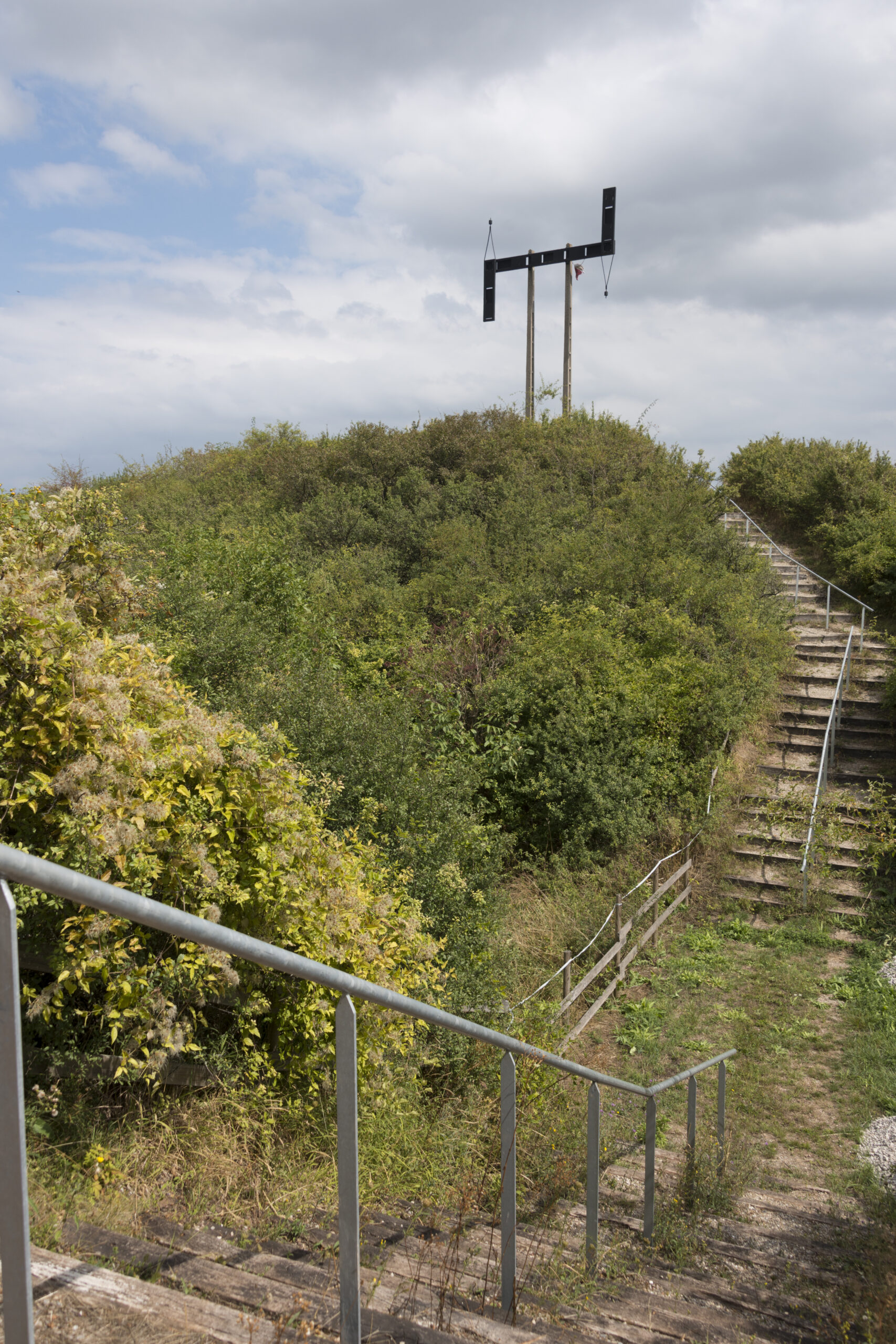
Rising to an altitude of 301 metres, Mont Kochersberg offers stunning panoramic views of the surrounding countryside. But behind the view lies a fascinating history as well.
At the summit today stands a replica of a Chappe telegraph. Before the telephone, radio or the internet, this optical communication system enabled messages to be transmitted over long distances via a series of towers. The Kochersberg was then a strategic relay point on the line linking Saverne to Strasbourg.
Just a few steps away, two old moats also serve as a reminder of the castle of the Bishops of Strasbourg, built in the 13th century and destroyed in the 16th century.
A place that almost single-handedly encapsulates several centuries of history!
Why do we love it? Because here, heritage and landscape become one. You can extend your exploration along the ‘Autour du Kochersberg’ trail, between Neugartheim, Willgottheim and Avenheim.
2. Push open the door of the Himmolsheim Chapel in Fessenheim-le-Bas
Nestled amongst the landscapes of the Kochersberg lies a small chapel whose stones have many stories to tell.
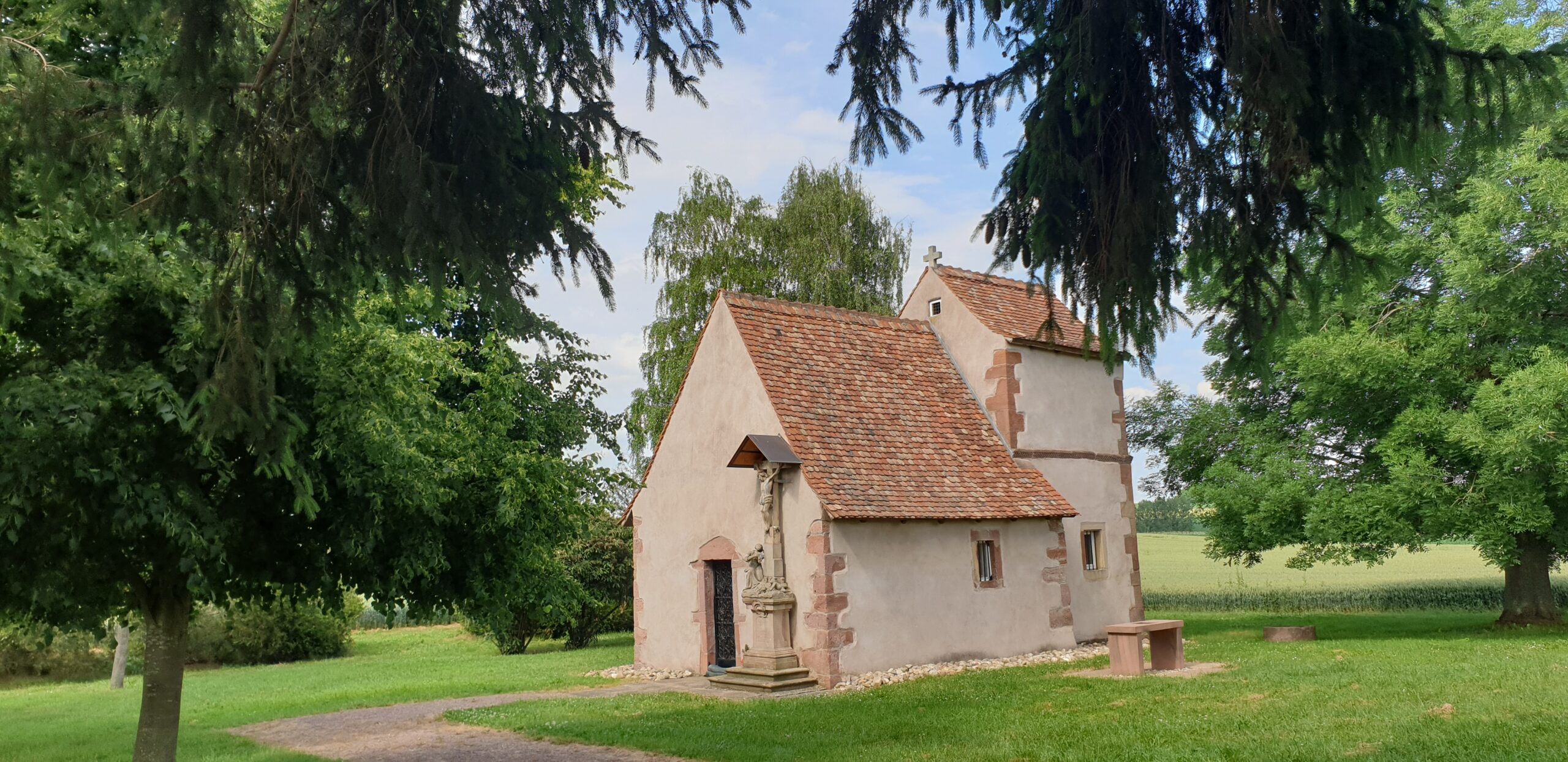
St Margaret’s Chapel, also known as Himmolsheim Chapel, dates back to the 12th century. It was once the church of a small hamlet comprising around ten houses, which no longer exists: Himmolsheim.
Its massive two-storey Romanesque tower and gabled roof give it a particularly distinctive silhouette.
This is precisely the sort of place you might walk past without realising it has stood for nearly 900 years.
You can also explore the area on foot via a signposted trail around Fessenheim-le-Bas. And for the more curious, the Tourist Office can provide information on guided tours of the chapel.
Take a closer look at the Romanesque architecture of the tower, a testament to the Middle Ages in the Kochersberg region.
3. Discover the pilgrimage church in Hohatzenheim
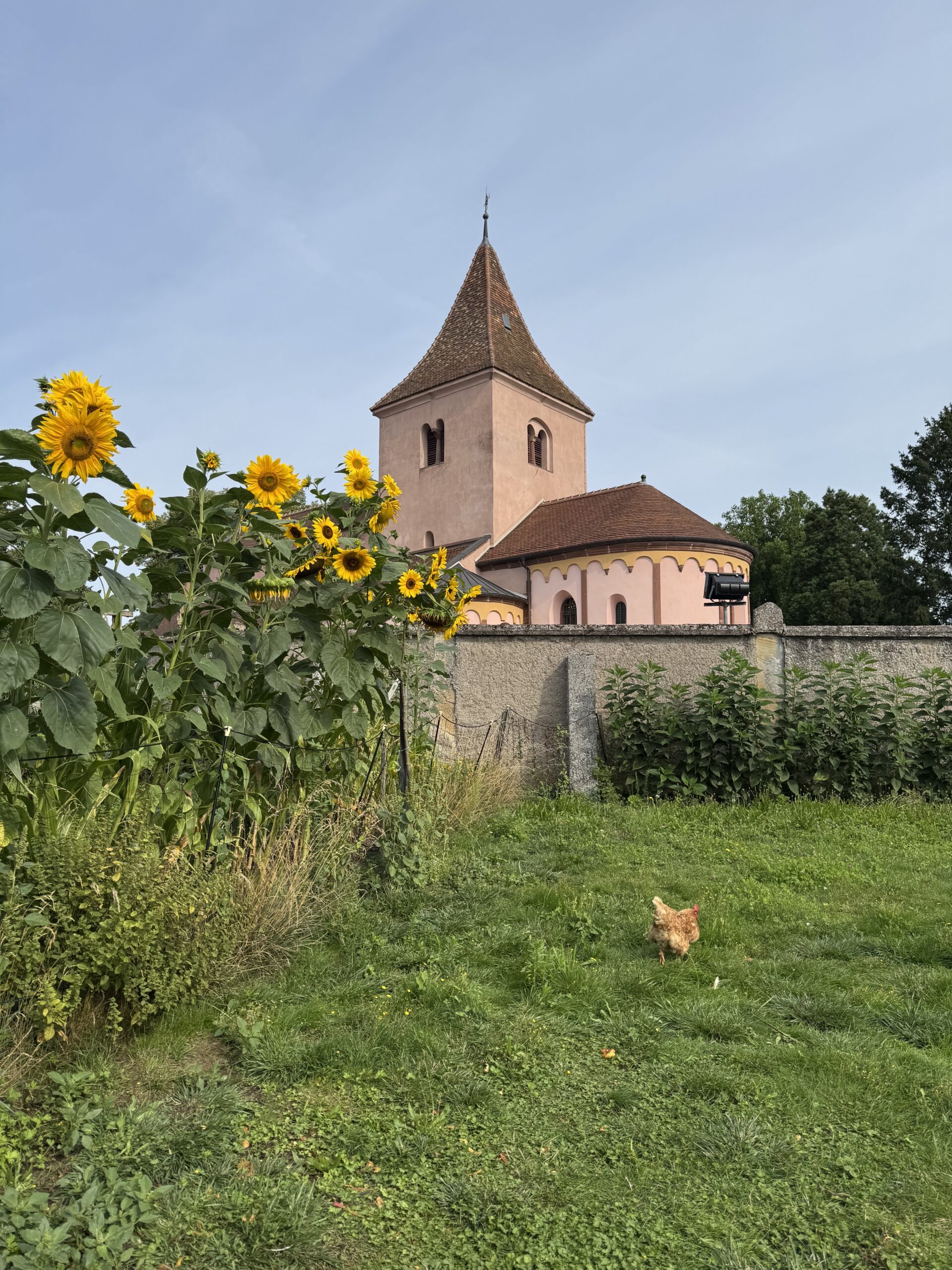
Perched high above the countryside,the church at Hohatzenheim is one of those places that surprise visitors as much for their location as for their history.
It is thought that an early church was built here as early as the 8th century. The present building, in the Romanesque style, dates mainly from the 12th century and has been listed as a historic monument since the late 19th century.
Inside, however, lies a particularly remarkable treasure: a Pietà carved from a single block of lime wood between the late 15th and early 16th centuries, attributed to the sculptor Nikolaus Hagenauer.
Hohatzenheim also remains a thriving place of pilgrimage. Proof that heritage is not just about stones and artefacts: it is also made up of traditions passed down from generation to generation.
Why visit? For the religious heritage, of course, but also for the setting and the view of the surrounding countryside.
4. Step inside the old synagogue in Hochfelden
In the heart of Hochfelden, an unassuming building tells an essential part of the history of the Pays de la Zorn.
The former synagogue, built in 1841, has been restored and converted into a museum. The complex includes the former synagogue, the Jewish school and a mikveh, the ritual bath located in the basement. The complex is listed in the supplementary register of Historic Monuments.
Today, the site is home to the Musée Mémoire & Paix, dedicated to the history of conflicts and the duty to remember. Uniforms, artefacts, documents and even vehicles help to bring contemporary history to life through the experiences of ordinary men and women. In 2026, the museum is open to the public on Wednesdays and Sundays from May to October.
And to continue exploring Hochfelden, a fun 2.7 km walking trail takes young and old alike through the town’s streets in search of clues relating to its heritage.
One detail not to be missed: the still-visible remains of the old synagogue, which bear witness to the presence and life of the local Jewish community.

5. Step back in time at the Le Monde Rural d’Antan museum in Gougenheim
This is probably one of the most unusual places in this selection.
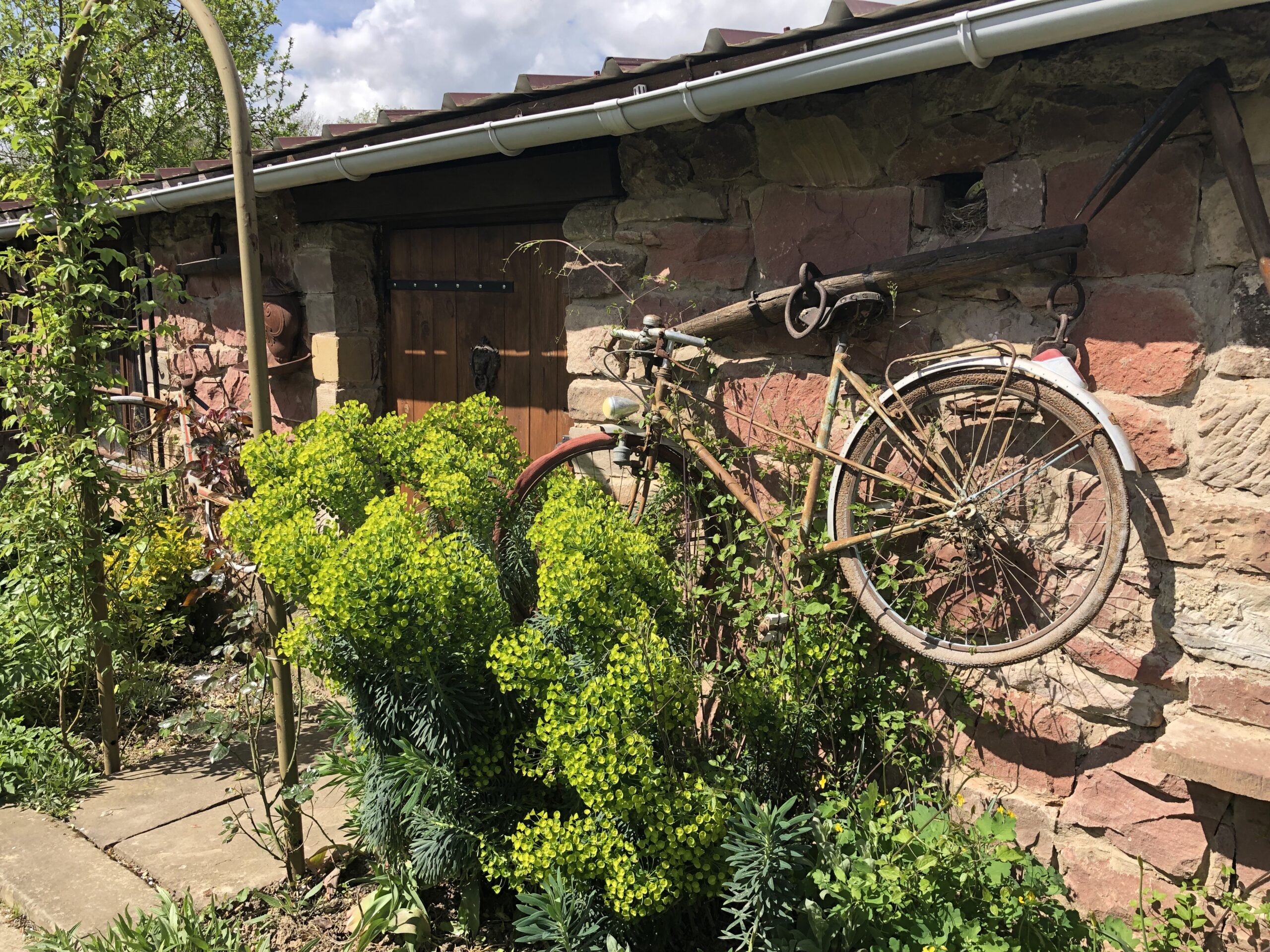
In Gougenheim, Jean-Paul Koebel has transformed his home into a veritable museum of everyday life from days gone by. For over fifty years, he has been collecting and displaying antique objects with infectious enthusiasm.
Visitors move from one room to the next as if travelling back in time: the kitchen, the medicine cabinet, the garage… In total, seven areas allow visitors to rediscover the objects, daily routines and trades that once defined life in the countryside.
Outside, the exploration continues with a medieval garden designed by the owner. The private museum can be visited by appointment.
A visit that serves as a reminder that heritage is not found solely in large museums. It also thrives thanks to the local people who collect, preserve and pass on the memories of their region.
Another must-do in Gougenheim: explore the village’s discovery trail. Stretching for around 2.2 km, it tells the story of the village’s architecture, its traditional trades, its social structure, its traditions and even the story of its former executioner!
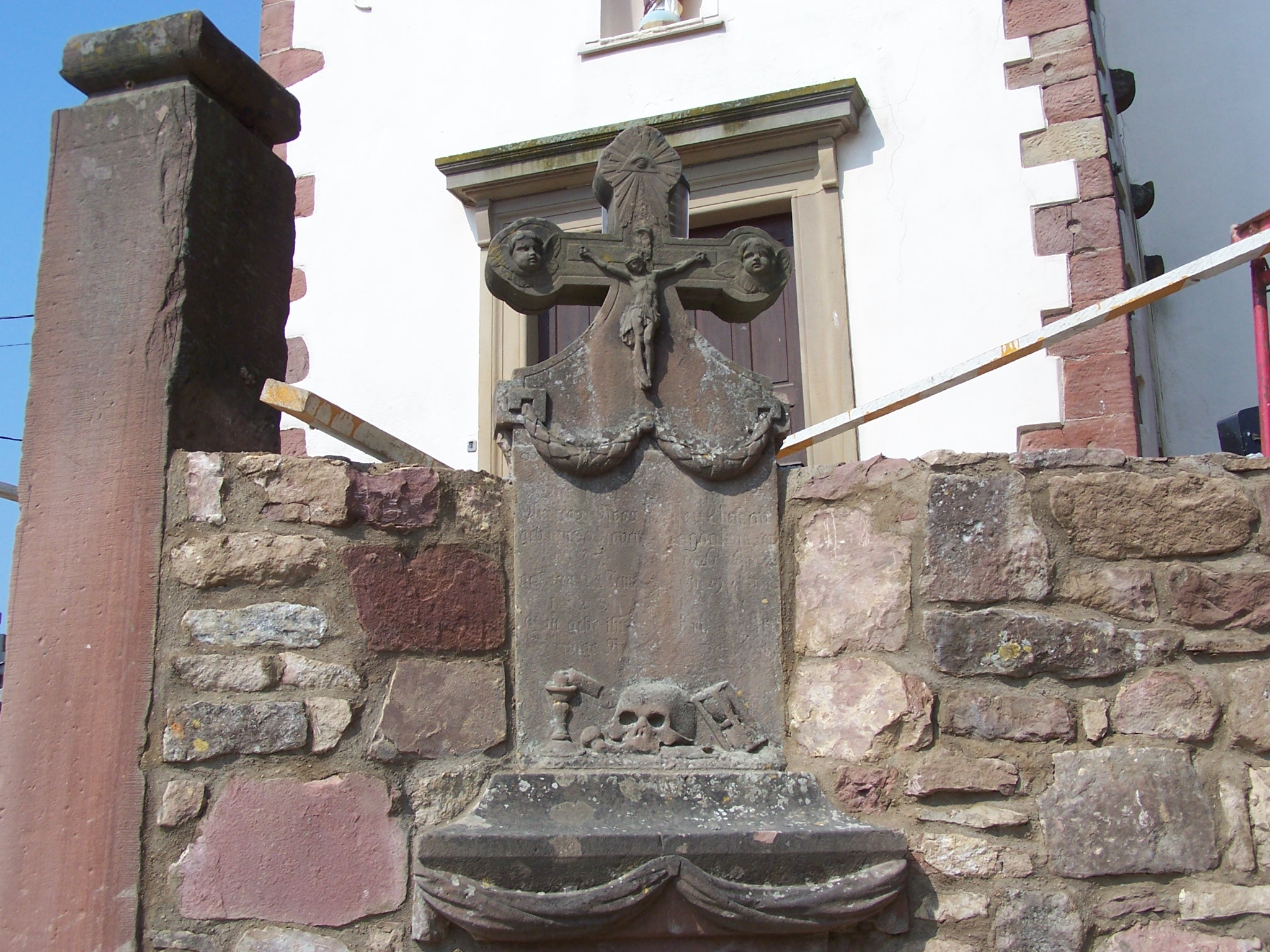
6. Take in the rural crosses and wayside crosses of the Kochersberg
They are such a familiar part of the landscape that we sometimes end up overlooking them.
Yet rural crosses and ways of the cross form a particularly rich part of the Kochersberg’s heritage. Situated at the entrance to villages, by the wayside or at crossroads, they bear witness not only to faith, but also to family histories and rural life in centuries past.
The Way of the Cross, around Durningen, Rohr, Gougenheim and Kienheim, allows you to see no fewer than 37 of them, as well as a chapel dedicated to Saint Lawrence dating from 1524.
Here, there’s no need to step inside a museum: all you need to do is walk and keep your eyes open.
Every inscription, every date and every sculpture then becomes a clue to a better understanding of those who lived in this area before us.
Our tip: take the time to look closely at the details of the monuments. Sometimes, heritage can be found just a few centimetres away.
7. Rediscover the Kochersberg at the Maison du Kochersberg
Let’s round off this exploration in Truchtersheim, at the heart of the Maison du Kochersberg.
More than just a museum, this venue tells the story of the region’s identity, its history, its traditions and the evolution of rural life. Its temporary exhibitions regularly offer fresh perspectives on local heritage, ranging from traditional costumes to farming practices, and covering everything from food to local crafts.
In 2026, the visit will take on a distinctly local flavour with the exhibition ‘From Hops to the Spirit of Beer’, dedicated to the role of ‘green gold’ and the brewing tradition in Alsace.
A great starting point for understanding the Kochersberg of yesterday… but also that of today.
And as the Le Beau Jardin Tourist Office is located in the same building, why not pop in to pick up some ideas to continue your exploration of the region!
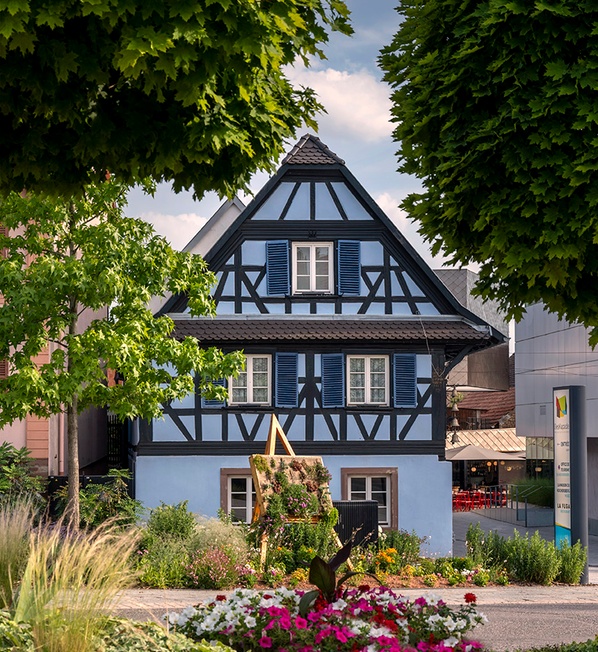
There is heritage everywhere in Le Beau Jardin
A castle of which only a few traces remain, a secluded chapel, an old synagogue, a cross by the side of a path, work clothes or an object carefully preserved in a private collection…
In the Kochersberg and the Pays de la Zorn, heritage often reveals itself where you least expect it.
The European Heritage Days are a wonderful opportunity to go and discover it, but these treasures are worth exploring all year round. When out for a stroll, take the time to look at a façade, read an inscription or wander down an unfamiliar side street: your next discovery might be right in front of you.
And you – which of these seven places have you already visited?
To plan your outing, find our suggestions for visits and discover the events taking place at Le Beau Jardin, check our events calendar or come and meet the team at the Tourist Office in Truchtersheim.
 Share on Facebook
 #visitlebeaujardin

Here, we open the doors to our beautiful garden.

 Follow us on @visitlebeaujardin