




- Home /
- Magazine
Alsatian sauerkraut: a dish from the heart and the land
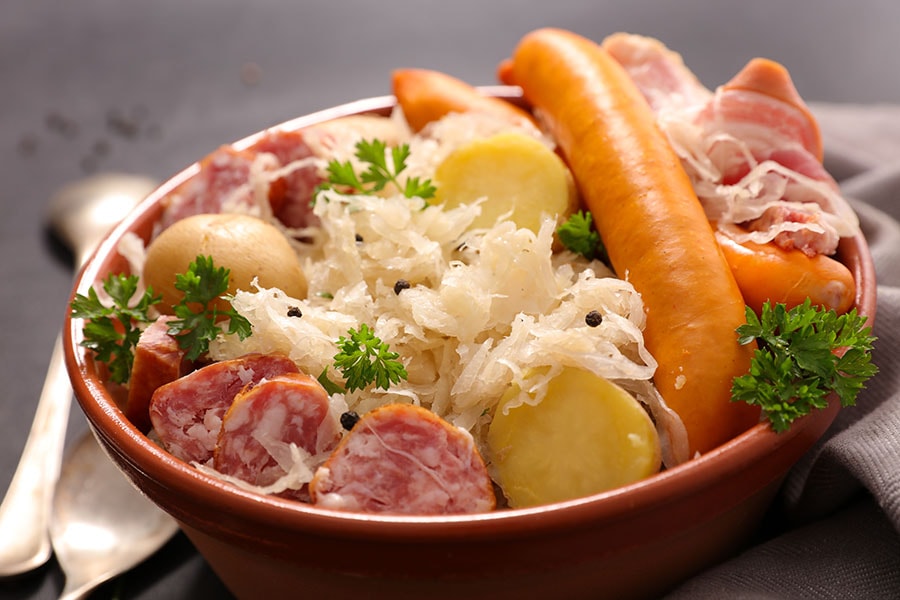
The quintessential symbol of Alsatian gastronomy, choucroute garnie has been warming tables for centuries. Behind this generous and convivial dish lies a true story of the land, know-how and tradition. Discover the secrets of fermentation, the variety of fillings and family recipes behind this winter dish that has become part of our heritage.
A simple dish with ancient roots
Sauerkraut may be associated with Alsace, but its history goes back much further. The origins of fermented cabbage go back to Asia, where Chinese workers building the Great Wall were already eating cabbage preserved in brine to get through the long winters. The process then travelled to Europe, first via the Germanic peoples, then as far as the Upper Rhine.
In Alsace, the first written mention of the word “Sürkrüt” (literally “sour cabbage”) dates back to the 15th century. But it was in the 19th century that sauerkraut as we know it today, served with meat and potatoes, became a festive dish with a strong sense of identity.
Long regarded as a popular dish – because it was cheap and nutritious – it is now also found on gourmet tables, revisited by the most famous chefs.
Sauerkraut, a symbol of the Alsatian way of life
Behind sauerkraut lies a whole philosophy of sharing. It’s made for big feasts, village celebrations and family gatherings. It evokes conviviality and generosity, values that are dear to Alsatians.
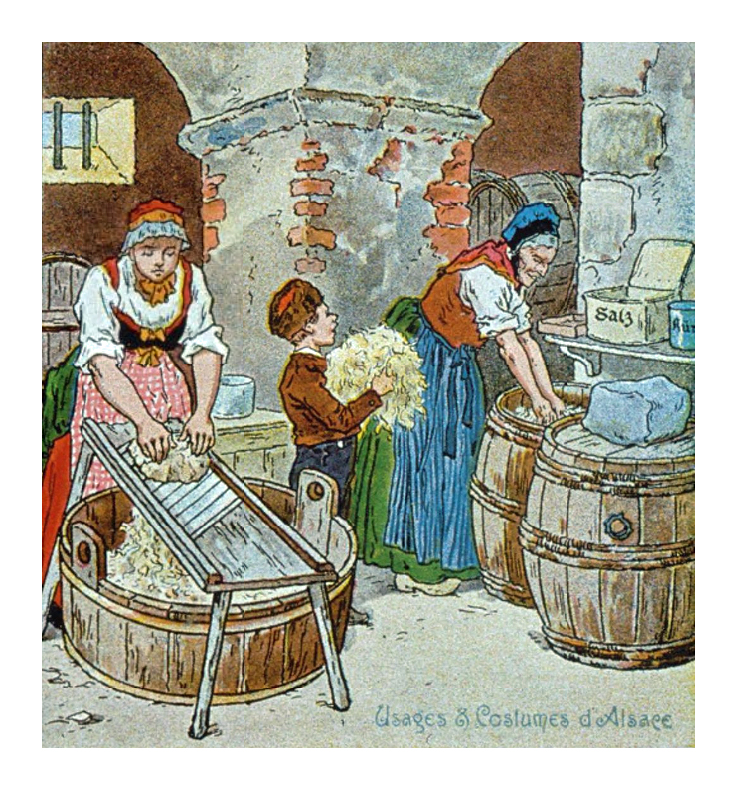
In Kochersberg and the Pays de la Zorn, the tradition is still very much alive. Some families still ferment their own cabbage in large stoneware jars in autumn. Winter markets are littered with mountains of raw sauerkraut, sold by weight and ready to be cooked to taste.
And did you know that sauerkraut has been a Protected Geographical Indication (PGI ) since 2018?
This recognition guarantees that the cabbage and its processing come from Alsace, a region that produces more than 25,000 tonnes of sauerkraut every year – almost two-thirds of French production.
The secrets of preparation
Fermentation: age-old know-how
The white cabbage (often of the Filderkraut variety) is finely chopped, salted and then packed into stoneware vats or jars. This natural salting triggers lactic fermentation, which transforms the cabbage’s sugar into lactic acid, giving it its characteristic slightly tangy flavour.
In the past, this totally natural method of preservation meant that the vegetable could be stored throughout the winter, without refrigeration.
Traditional ingredients
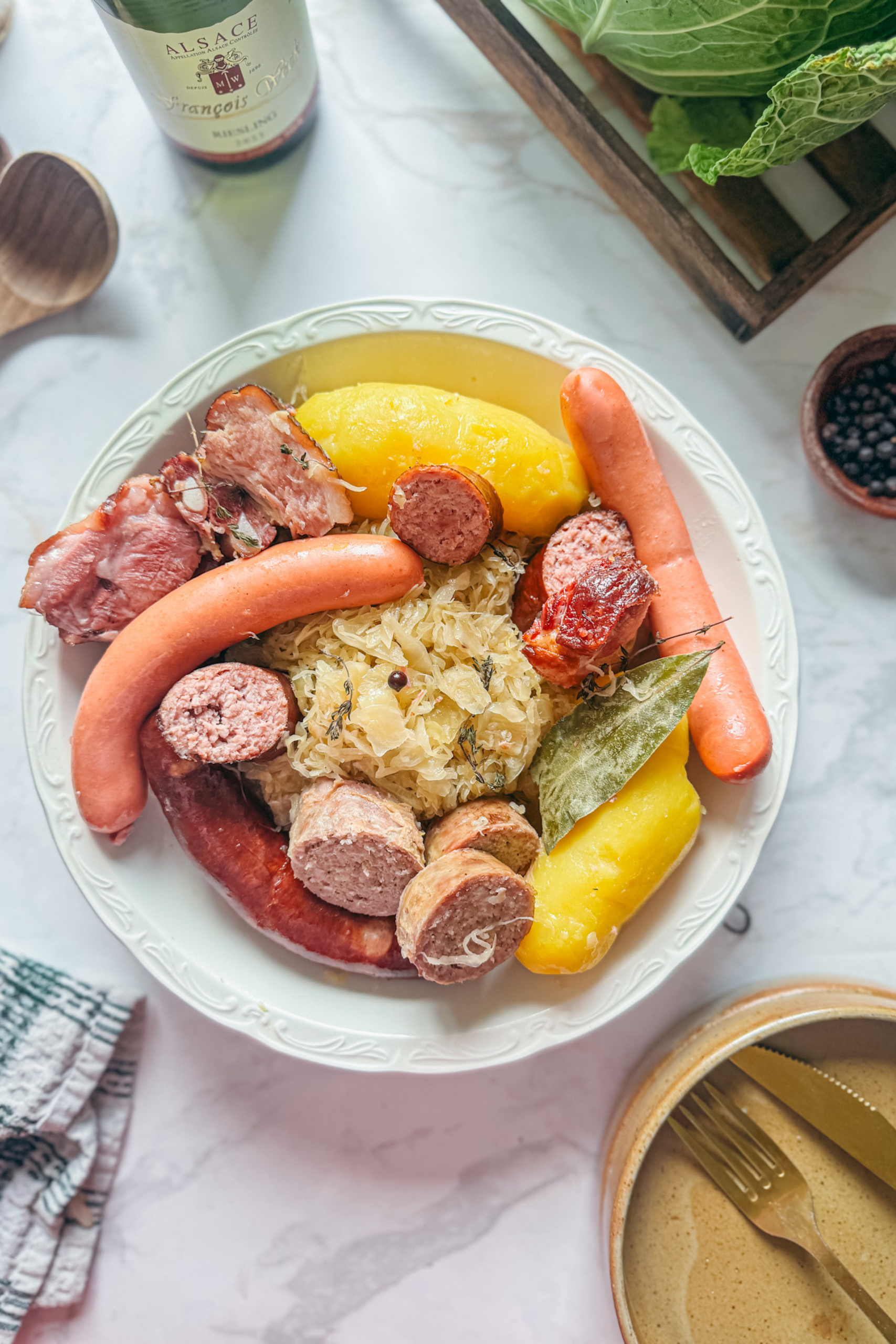
A real Alsatian sauerkraut includes :
- 1.5 kg raw Alsace PGI sauerkraut
- 1 smoked pork shoulder
- 1 knuckle of pork
- 4 Strasbourg sausages
- 4 Montbéliard or Morteau sausages
- 4 slices of smoked bacon
- 6 firm-fleshed potatoes
- 1 onion
- 10 juniper berries
- 2 cloves
- 1 bay leaf
- 1 bottle of dry Alsace white wine (Riesling or Sylvaner)
- Salt, pepper, a little goose fat or lard
Step-by-step preparation
- Preparing the raw sauerkraut
Rinse the sauerkraut in cold water to remove excess salt, then spin dry. - Fry the onion
Melt the goose fat in a large casserole dish, then add the onion studded with cloves. - Cooking the sauerkraut
Lay out a layer of sauerkraut, add the spices and meats (except the sausages).
Pour in the white wine and a little water to cover half the sauerkraut.
Cover and simmer gently for 2? hours over a low heat. - Finish
Add the potatoes and sausages 30 minutes before the end of cooking.
Taste, adjust the seasoning and serve piping hot with mustard or horseradish.
Variations on sauerkraut
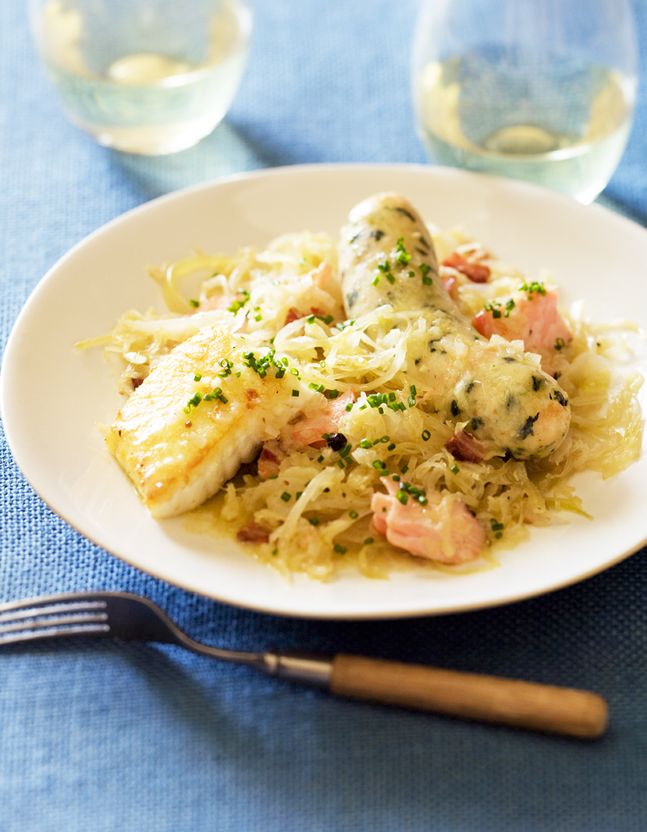
Fish sauerkraut
First served in the 1970s, this has become a classic in Alsatian restaurants.
Sauerkraut is prepared in the same way, but garnished with fish: salmon, cod, pike-perch, sometimes prawns or scallops. White wine is still used, but is often partly replaced by a fish stock.
👉 The result is a lighter, more refined version that is much appreciated by gourmets.
Vegetarian sauerkraut
Increasingly popular, this version focuses on vegetables: carrots, parsnips, potatoes, even smoked tofu or vegetable sausages.
White wine remains the aromatic base, sometimes replaced by a fragrant vegetable stock.
👉 A tasty alternative to meatless sauerkraut, ideal for Friday lunches or a flexitarian crowd.
The new generation of sauerkraut
Some Alsatian chefs are revisiting sauerkraut with creativity: sauerkraut with champagne, smoked fish, foie gras or even millefeuille!
This modernisation doesn’t betray tradition, it brings it to life. As one Strasbourg chef often says: “Sauerkraut is a state of mind before it is a recipe”
Sauerkraut, between terroir and living heritage
Alsatian sauerkraut is much more than just a dish: it’s a cultural symbol, a link between generations, an ambassador for the region.
Each village in the Kochersberg or the Pays de la Zorn has its own way of preparing it, its own little tricks: a little more wine here, a piece of apple or bacon there, depending on family memories and customs.
In some villages, sauerkraut festivals are still held in the autumn. Local restaurateurs and producers share their know-how, reminding us that this dish embodies the richness of a region that is rural, generous and proud of its traditions.
To conclude: sauerkraut, a dish to be shared without moderation
Served on a winter’s Sunday, accompanied by a glass of Riesling or a local beer, sauerkraut retains all its magic: that of bringing people together, warming them up and taking their senses on a journey.
It perfectly represents the spirit of Le Beau Jardin: an area where nature, culture and gastronomy come together in simplicity and authenticity.
 Share on Facebook
 #visitlebeaujardin

Here, we open the doors to our beautiful garden.

 Follow us on @visitlebeaujardin